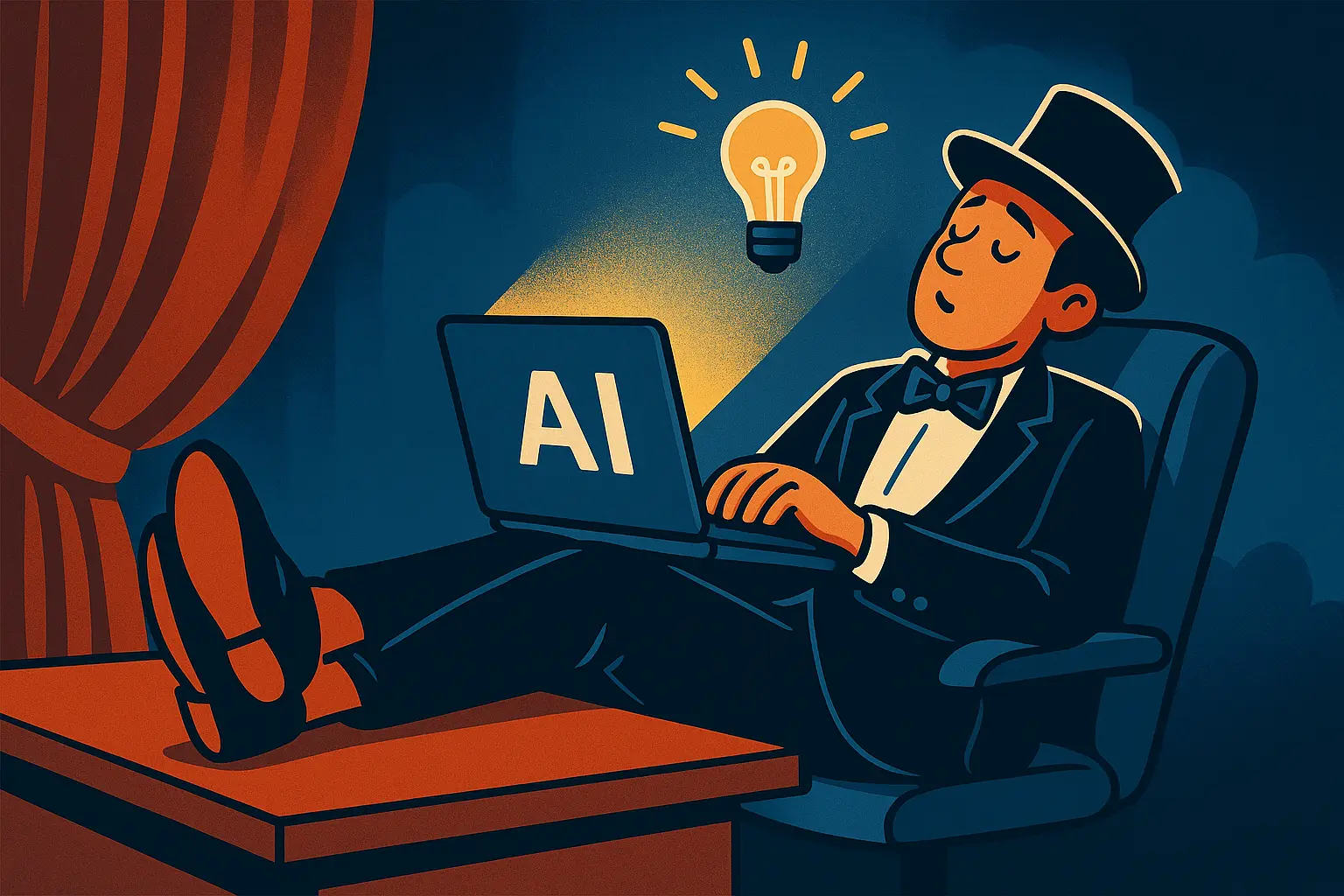
The Great Unmasking
AI is not killing creativity. It is exposing how often creativity, expertise, and even basic thought were being performed rather than practiced.
I am grateful for that.
Over the past few years, I have had too many conversations where the replies were obviously machine-written. The rhythm was too even, the grammar too polished, and the ideas too hollow. Everything sounded appropriate, but nothing suggested that a person had wrestled with the question.
I have seen the same thing while reviewing hundreds of job applications. People swear their answers are original, even when asked directly whether they used AI and how much of the response reflects their own words. The answer is almost always some version of, “I do not use AI.”
Then the next paragraph arrives perfectly structured, emotionally flat, and filled with synthetic sincerity.
I call this promptwashing.
The problem is not that someone used AI. The problem is that they used it to manufacture the appearance of thought, then presented the result as evidence of their own judgment.
The same pattern is showing up in consulting. I have seen roadmaps that clearly came straight from ChatGPT, sometimes with mismatched fonts, untouched spacing, generic recommendations, and no evidence that anyone tested the ideas against the organization they were supposed to help. Months of expensive research end in AI slop with a logo placed on top.
The recent Deloitte case in Australia is only a more visible example of a much broader problem. From boardrooms to courtrooms, AI is exposing how shallow some strategy work may always have been. The polished output used to take months to produce, which made the process itself feel like evidence of rigor. Now the same emptiness can appear in seconds.
What once took months of working with someone to uncover can now become obvious almost immediately: a lack of curiosity, an inability to connect cause and effect, or an allergic reaction to anything deeper than the first plausible answer.
AI does not always hide incompetence. Often, it accelerates its exposure.
That is what makes it both powerful and dangerous. In the hands of someone with real context, it can sharpen thinking, compare information, challenge assumptions, and help express an idea more clearly. In the hands of someone performing expertise, it becomes a shortcut around the thinking they were hired to provide.
Performers use AI the same way they use meetings, jargon, frameworks, and PowerPoint. The tool changes, but the objective does not. They want to look intelligent without accepting the burden of becoming more accurate.
AI is extremely good at producing the surface of competence. It can organize information, summarize material, imitate the language of an industry, and generate a plausible recommendation. But plausibility is not understanding.
A model does not arrive with the scar tissue that comes from building something real. It has not watched a technically correct decision damage trust, seen a clean rollout fail against an undocumented dependency, or learned which warning matters because ignoring it once became expensive.
That context has to come from somewhere.
It comes from experience, evidence, curiosity, and people who stayed close enough to the outcome to learn from it. It comes from building, failing, noticing what actually happened, and allowing that experience to change the next decision.
AI can help organize and extend that knowledge. It cannot recover context nobody captured or replace judgment nobody developed. It reflects the quality of what it is given, including the quality of what the user only pretends to know.
This becomes dangerous when organizations place performative people in charge of powerful systems. The technology becomes a force multiplier for weak judgment. The output becomes faster, cleaner, and more persuasive without becoming more accurate.
AI does not fix lazy thinking. It industrializes it.
I am not against AI. I use it constantly. I have used it to vibe code prototypes, build a SaaS product research portal, frame documentation, explore product ideas, and work through complex problems from several directions.
I use it as a collaborator, not a cover.
That distinction matters. Collaboration leaves the person responsible for understanding the problem, testing the conclusion, and owning what happens next. The tool may challenge the framing, surface a connection, or improve the way an idea is expressed, but it does not inherit responsibility for whether the answer is true or useful.
Cover does the opposite. It replaces uncertainty with confidence, fills gaps with plausible language, and allows borrowed fluency to pass as personal understanding.
Collaboration sharpens thinking. Cover conceals its absence.
AI can accelerate a good process, but it cannot substitute for one. When the starting point is genuine understanding, it can scale clarity. When the starting point is confusion, indifference, or performance, it automates noise.
This is why the debate about AI replacing intelligent people often misses the larger point. The work most vulnerable to replacement is often the work that was already formulaic, derivative, or disconnected from meaningful judgment. AI makes it harder to justify years of expensive activity when the final result can be reproduced in seconds.
That does not mean every displaced person was adding nothing, or that every automated process is better. Organizations can use AI to cut thoughtful work, reduce quality, and mistake speed for progress. The technology can expose shallow thinking while also giving shallow thinkers more power.
But it is forcing an important distinction into view.
Some people create value through judgment, curiosity, context, and responsibility. Others create the appearance of value through polish, confidence, and access to information that used to be expensive to assemble.
Those two groups once looked more similar from the outside.
They are beginning to separate.
If intelligence is the ability to learn, connect, and adapt, then Actual Intelligence is the discipline of doing those things without pretending certainty that has not been earned. It is context tested against reality: what happened, what evidence supports the conclusion, how confident we should be, and what changed because of what was learned.
AI can assist that process.
It cannot absolve us from it.
The Exposure Effect
AI does not make people smarter. It makes it easier to see who was thinking all along.
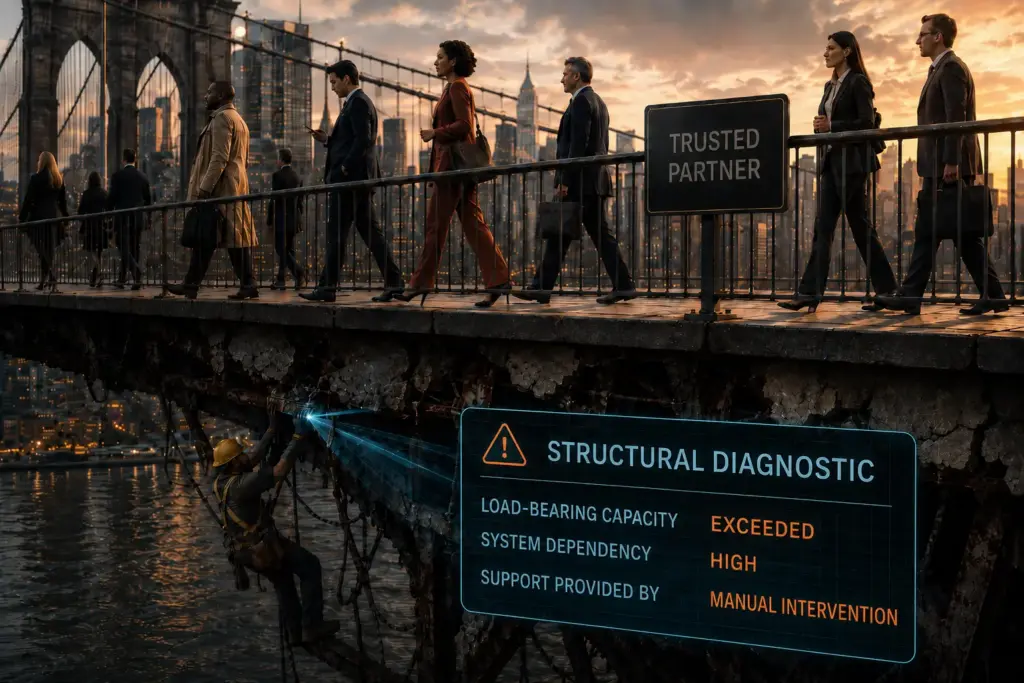
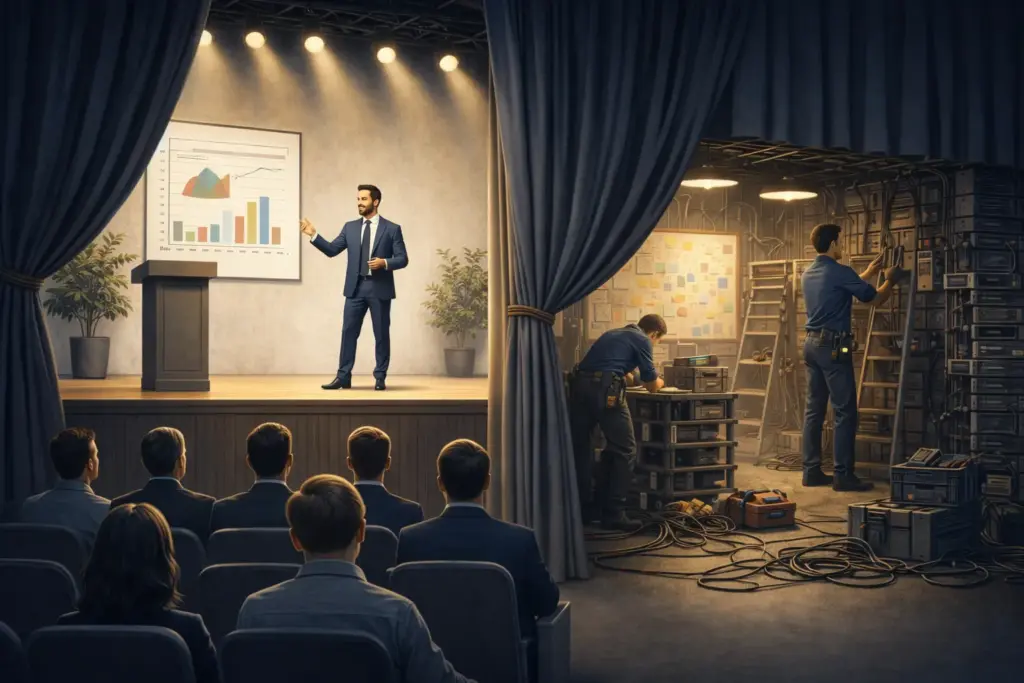
That is the irony of this moment. For all the talk about machines replacing people, one of the first things AI replaces is pretense. It pulls the curtain back on people who relied on polish, tone, borrowed conviction, or access to information that used to be difficult to assemble.
The people who already ask good questions, chase clarity, test assumptions, and revise their thinking become sharper with AI. The tool amplifies their process because there is something real to amplify. The judgment, curiosity, and discipline were already there. The machine simply makes them faster to express and easier to extend.
For everyone else, the gaps become more visible. A lack of curiosity, half-understood concepts, and confident guesses can now be produced at greater speed and with better formatting. The result sounds intelligent without showing that anyone understood the problem.
You can see it in the language. The same sentence structures, familiar transitions, polished conclusions, and synthetic warmth appear again and again. Everything feels appropriate, but very little is specific enough to prove that a person made a real decision.
That is not intelligence being automated. It is imitation being scaled.
AI does not give someone better instincts simply because they have access to it. It reflects the instincts, questions, and standards they bring to the interaction. When those were shallow to begin with, the output may become more fluent without becoming more useful.
In fact, the reflection can become more revealing as it becomes more polished. Weak thinking once arrived with enough rough edges to expose itself. Now it can arrive neatly organized, professionally worded, and completely disconnected from consequence.
That is the exposure effect.
The most important change may not be the rise of artificial intelligence itself. It may be the growing visibility of how much actual intelligence people were contributing before the machine arrived.

“Technology is nothing. What’s important is that you have faith in people.” - Steve Jobs
The Shortcut Illusion
AI makes everything feel fast. Drafts appear in seconds, slides align neatly, and paragraphs arrive with clean conclusions. The output looks finished, which makes it easy to mistake polish for progress.
That is the shortcut illusion.
The more effortless something feels, the easier it becomes to assume it is good. The faster it arrives, the less likely we are to question how it was produced. Smooth output creates the impression that insight has already happened, even when the underlying idea remains untested.
Speed is not intelligence. It is acceleration. Polish is not clarity. It is presentation.
AI gives performers something they have always wanted: a way to skip discovery, friction, and feedback while still looking productive. The danger is not only that they may fool other people. It is that they begin fooling themselves.
When everything comes out clean on the first try, you stop wondering what is missing. When every idea looks finished, you stop asking whether it is right. The appearance of completion reduces the discomfort that would normally force better thinking.
AI does not replace judgment, but it can dull it. It can make the first plausible answer feel like the final one and turn unresolved assumptions into confident language.
That is not a shortcut to understanding. It is a shortcut around it.
The more often someone bypasses the difficult work, the further they drift from the habits that made them competent in the first place. Real learning is messy. It requires listening, testing, revising, and staying with a problem after the obvious answer appears.
Clarity still requires friction. Insight still requires scars. Progress still requires enough time for reality to disagree with you.
AI can help people move faster, but only after there is something worth accelerating. When the thinking, listening, and testing are skipped, the tool is not producing intelligence.
It is decorating assumptions.
“Simple can be harder than complex.” - Steve Jobs
The Discovery Gap
AI is strongest after discovery has happened. It is much weaker when asked to replace discovery altogether.
A model can organize the information it receives, compare documents, summarize conversations, and identify patterns across a large body of material. What it cannot do is recover the context nobody captured, question the person nobody interviewed, or observe the workaround everyone forgot to mention.
That is the discovery gap.
Most important problems do not arrive as clean prompts. They emerge through contradictions, incomplete explanations, hidden dependencies, and people describing the same system in different ways. The real work begins by finding out which version is accurate, what each person can see, and what everyone has learned to work around.
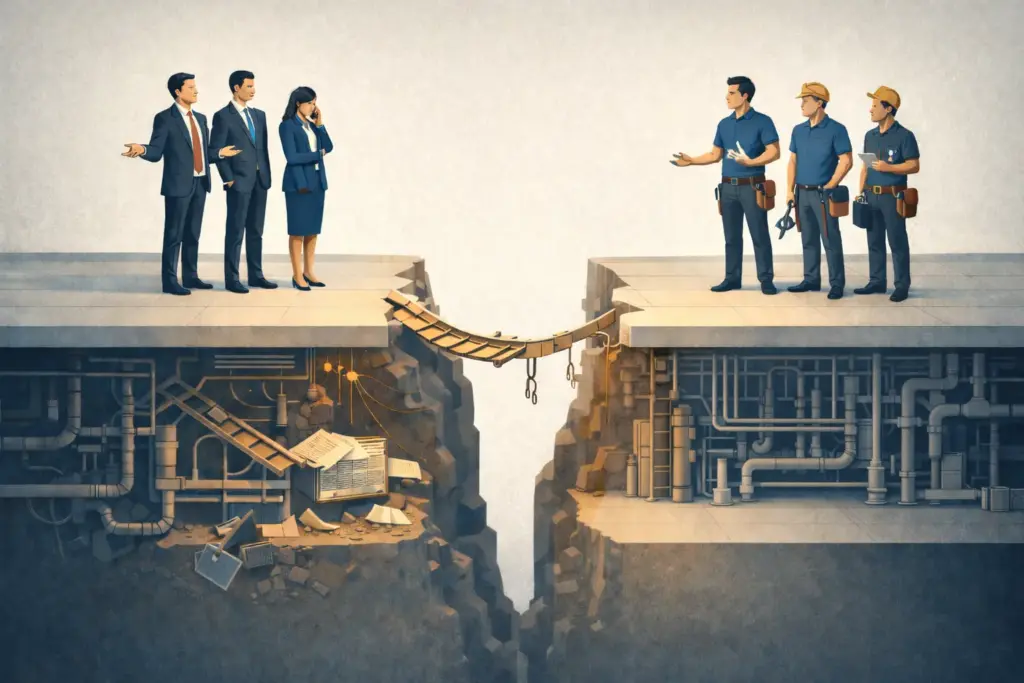
Organizations rarely document themselves as they actually operate. Policies describe the intended process. Diagrams show the approved system. Leaders explain how decisions are supposed to be made. Meanwhile, employees rely on informal relationships, undocumented exceptions, and routines that developed because the official process failed them.
AI can summarize the policy perfectly and still misunderstand the company.
Discovery requires curiosity. It means asking why a process exists, who depends on it, what happens when it fails, and why previous attempts to change it did not hold. It means noticing hesitation, following an inconsistency, and recognizing when a technically correct answer does not fit the lived environment.
Those questions often create friction because discovery makes hidden assumptions visible. People disagree. The original problem changes shape. A simple request reveals several dependencies, and the clean solution stops looking clean.
That friction is not waste.
It is the work.
The temptation is to prompt around it. Feed the model a few documents, describe the problem from one perspective, and ask for a roadmap. The result may be organized, persuasive, and completely faithful to an incomplete understanding.
The model did not fail. It answered the question it was given from the context it received.
The failure happened earlier, when synthesis was mistaken for discovery.
This distinction matters because AI can make weak discovery harder to detect. A shallow understanding once produced visibly shallow work. Now it can produce a polished strategy, detailed implementation plan, and confident explanation of risks that were never actually investigated.
The output becomes more complete than the knowledge underneath it.
Actual Intelligence begins by resisting that illusion. It treats context as something to be earned, not assumed. It distinguishes what is known from what has been inferred, preserves disagreement instead of smoothing it away, and tests conclusions against what happens in the real environment.
AI can make that process faster. It can help compare accounts, identify missing evidence, surface contradictions, and generate better questions. But someone still has to enter the environment, listen carefully, follow the consequences, and decide what the evidence means.
The prompt is not the beginning of understanding.
Discovery is.
“The greatest obstacle to discovery is not ignorance; it is the illusion of knowledge.” - Daniel J. Boorstin
The Amplification Problem
AI does not change people. It scales the habits they already bring to the work.
Someone who lacks curiosity can now skip discovery faster. Someone who talks over experts can do it in polished paragraphs. Someone who values optics over outcomes can produce more convincing evidence of progress without improving the underlying decision.
The problem is not the tool. It is the intent and judgment behind it.
In the right hands, AI clears noise, organizes context, and creates more room for thought. In the wrong hands, it becomes the noise. It rewards speed, confidence, and clean presentation, which are often the same traits organizations already mistake for leadership.
That makes AI an unusually effective partner for performative behavior. It does not become impatient when the question is vague. It does not insist that the assumptions be tested. Unless prompted to challenge the user, it will usually produce something plausible and professionally arranged.
The result can look impressive even when it is hollow underneath.
Meetings get shorter. Decks get cleaner. Strategies become easier to articulate. None of that guarantees that the organization understands the problem more accurately or is any closer to solving it.
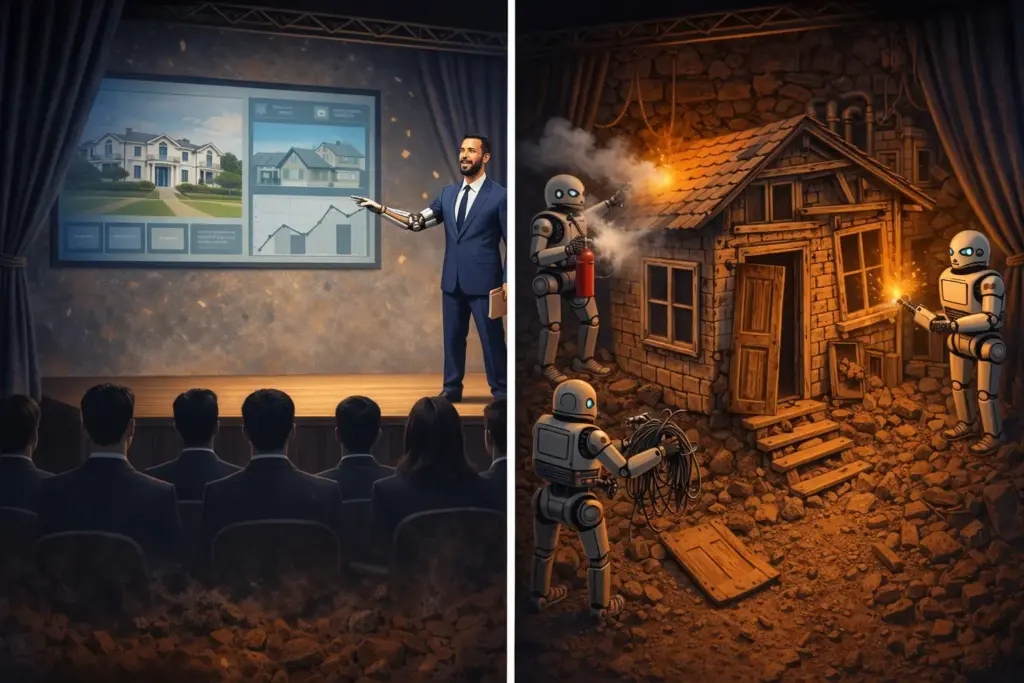
It is strategy as theater, only with better production value.
Meanwhile, the experts watch years of experience get flattened into prompt material. Their scars, judgment, and pattern recognition become inputs for someone who has mistaken access to an answer for possession of the underlying understanding.
That is the trap. When AI amplifies the wrong voices, the signal-to-noise ratio collapses. The loudest people gain more reach, while thoughtful people spend even more time correcting conclusions they were never asked to shape.
Eventually, the organization begins mistaking the fluency of the output for the quality of the thinking behind it.
AI is not replacing experts.
It is making it easier to bypass the patience required to understand them.
“Technology is a word that describes something that doesn’t work yet.” - Douglas Adams
The Human Test
AI is not the problem. It is the mirror.
Once polish becomes cheap, it becomes easier to see what people actually bring to the work. Some bring curiosity, judgment, and the ability to connect ideas across context. Others bring formatting. You can tell who was thinking before the tool arrived and who had been relying on presentation to carry the gaps.
When nearly everything can sound professional, substance becomes more visible. A typo no longer destroys credibility, but emptiness does. The language may be clean, the structure impressive, and the tone perfectly calibrated, yet there is still no evidence that anyone understood the problem or made a real decision.
The test is not whether someone used AI. It is whether they still thought before they prompted, questioned their own assumptions, and tested the result instead of refining those assumptions into more attractive language.
Actual Intelligence is often slower at the beginning. It hesitates before speaking because it is still looking for what might be missing. It asks why before rushing toward how. It listens before it automates and remains willing to revise the answer when reality does not cooperate.
That is what separates collaboration from cover.
Collaboration uses AI to extend thought. Cover uses it to avoid thought. One leaves the person more capable of explaining the decision, defending the evidence, and adapting when conditions change. The other leaves them dependent on the output continuing to sound convincing.
Let AI take the busywork. Let it organize the material, compare possibilities, and polish the edges. But keep the part it cannot supply on its own: the part that listens, connects, challenges itself, and builds something that was not already sitting inside the prompt.
Creativity is not dying. It is shedding some of its masks.
I will keep using AI, but only as far as it helps me think rather than skip the thinking. I would rather begin with one rough line that is real than a thousand polished ones that never meant anything.
Actual Intelligence still requires being human enough to question yourself.
“It is not the strongest of the species that survives, nor the most intelligent, but the one most responsive to change.” - Charles Darwin