Curtain Call
You’re at work. A problem’s on the table. The right people are in the room. It should be simple. Experts speak. Decisions get made. Progress happens.
Instead, someone drags the meeting onto a stage. Every idea gets a “yes, but.” Every plan detours into side chatter. The air goes heavy. You can feel it. This isn’t collaboration anymore. It’s performance.
Performative behavior wears the mask of leadership. It looks like collaboration, but it drains both. At the core, it isn’t competence. It’s insecurity. Real control doesn’t need a spotlight. If you can deliver, the work speaks loud enough. When you can’t, you grab the wheel just to prove you’re holding it.
Domination. Interruption. Endless what-ifs. These aren’t signs of confidence. They’re signs of fear. If you trusted your own power, you wouldn’t need to parade it. You wouldn’t hijack a meeting to box an expert into defending the obvious. Control-seeking is just a confession: I don’t trust myself to steer, so I’ll yank the reins from you.
And everyone knows the pattern, even if they don’t say it out loud. Meetings stall. Experts shut down. Decisions get watered until nothing has flavor. “Thoroughness” becomes fragility dressed up as rigor. Teams adapt the wrong way. They stop pushing. They stop trusting their own judgment. They sit back and let the performance run until the clock bleeds out. That’s how good outcomes die. Not from lack of talent, but from static drowning out the signal.
I’ve seen this show too many times. Thirty-five managers in my career. Peers I once trained who became my boss. Senior directors reporting straight to billionaire CEOs. I’ve worked with small farms just trying to survive, and I’ve helped protect massive enterprises like Bank of America. Scale doesn’t matter. The pattern repeats.
Behind the Curtain
Why does it happen? Because performance is fear in disguise. When people don’t feel in control, they grasp for control over others. When they can’t create real outcomes, they create the appearance of outcomes. They fall for their own tricks, toggle between “I don’t know this space” and “I know it better than you,” and surround themselves with other performers until the culture tips.
It shows up in familiar forms. The Derailers, who knock the room off track with side arguments and hypotheticals. The Debaters, who keep everyone orbiting their objections. The Maskers, who polish the optics upward while hiding the mess downward. And the Anchors, who weigh progress down by pulling focus to the wrong variable.
Each has its tells. Each has its costs. And each has counterplays. Call them early, and you keep the work moving. Ignore them, and the theatrics stop being interruptions. They turn into culture.
Cast of Characters
The What-If Hijack (Derailer)
It starts small. A plan is on the table, the room nods along, momentum builds. Then someone throws in: “But what if the data center burns down the same week we cut over? What if every single backup fails at once? What if the cloud provider just vanishes overnight?”
Suddenly, the meeting isn’t about the plan. It’s about defending against fantasy scenarios. You came in to solve one problem, and now you’re playing whack-a-mole with hypotheticals.
The What-If Hijack feels like diligence, but it’s fear in disguise. People reach for what-ifs when they don’t know the terrain. It’s a way to sound engaged without contributing expertise. When control feels out of reach, manufacturing risks becomes a substitute for competence.
The cost is real. Projects drown in edge cases. Budgets balloon. Compliance slips. IT sprawl grows unchecked because the team spends months planning for disasters that never arrive, while the real risks, the ones right in front of them, get ignored.
How do you cut through? Separate fact from assumption: “Is that based on past experience, or a concern you’re raising?” That alone kills a lot of noise. Then contain the loop: “Even if that scenario came up, the mitigation is X. It doesn’t change the main approach.” Acknowledge it, close it, move on.
If you’re managing someone like this, coach them privately. Praise the instinct for risk awareness, but redirect it toward evidence-based scenarios instead of imagination drills.
Because what-ifs never end. Left unchecked, they take over the meeting. And the only decision that gets made is no decision at all.

"Strategy without tactics is the slowest route to victory. Tactics without strategy is the noise before defeat." - Sun Tzu
The Endless Debate (Derailer)
The path forward is clear, momentum is building. Then the counterpoint drops. Not once, but again and again. Every solution gets another “yes, but.” Every answer spawns a fresh objection.
Soon, the meeting isn’t moving forward. It’s orbiting one person’s need to keep the debate alive.
The Endless Debate feels like thoroughness, but it’s theater. It’s a way to sound engaged without offering substance. Quick counters create the illusion of intelligence, but intelligence isn’t what moves projects forward. Expertise does. And expertise isn’t quick rebuttals. It’s connecting scars to solutions, cause to effect, risk to mitigation.
The cost is familiar. Projects stall. Deadlines slip. Budgets bloat. Compliance corners get cut. Experts burn out defending the obvious. Eventually, the loudest voice, not the most informed one, shapes direction.
How do you cut through? Name the pattern without escalating it: “Feels like we’re circling. Let’s park this and stick with the main path.” Then redirect to experience: “Has anyone actually seen this happen before? If not, let’s log it and move on.”
If you’re managing someone like this, coach them privately. Frame it as misdirected energy: contribution means clarity, not volume.
Because debate without direction isn’t diligence. It’s drag.
“Any fool can criticize, condemn, and complain, and most fools do.” - Dale Carnegie
The Filter (Masker)
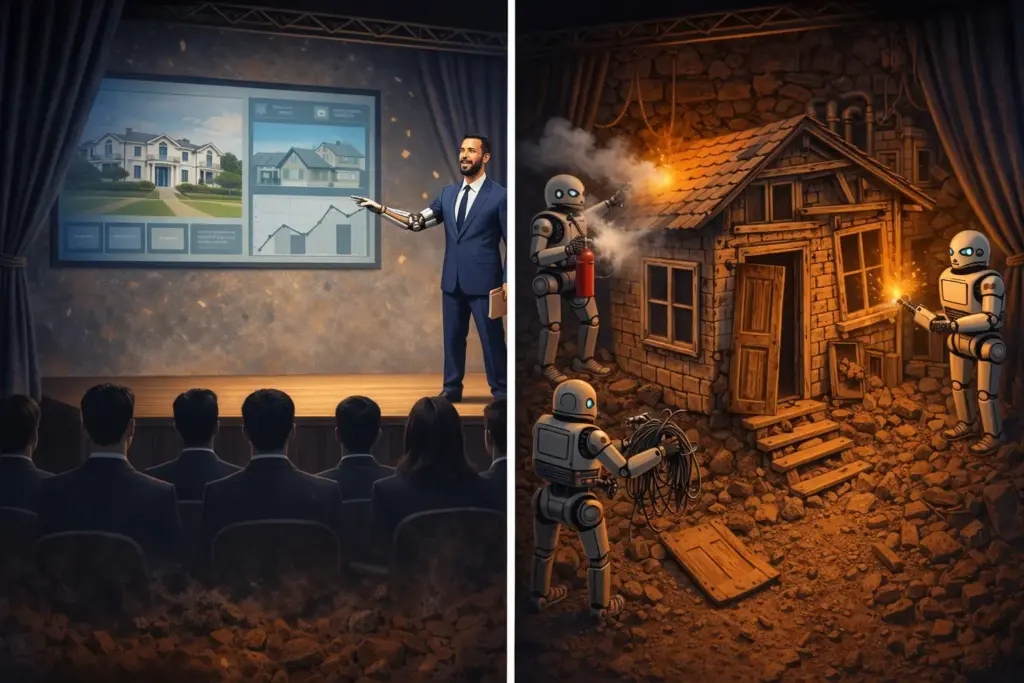
On the surface, everything looks smooth. In the executive meeting, the tone is calm, risks are “under control,” progress looks steady. Balanced. Professional. Reassuring.
But outside that room, the mask slips. Team members hear a different version. Tighter control. Selective updates. Praise flowing upward, pressure flowing downward.
The Filter thrives on narrative control. By shaping what flows up and what trickles down, they make themselves indispensable. They appear reasonable in one direction while consolidating power in the other. Fear drives it: fear of being exposed, of failing to deliver, of being sidelined if the full truth comes to light.
The impact is predictable. Trust erodes in both directions. Executives make decisions based on half-truths. Teams feel alienated and second-guessed. Real risks stay hidden until they blow up. I’ve watched projects drift for months under “green” status reports, only for leadership to see red when it was already too late.
How do you cut through? Transparency is the antidote. Create reporting channels that don’t rely on a single narrator. Cross-check updates. Invite experts to present directly, even briefly, so leadership hears the unvarnished version.
If you’re managing a Filter, be clear: balanced reporting means complete reporting. Not just the wins. Not just the optics. Watch closely for communication control. That’s where the dimmer switch lives.
Because the Filter isn’t a steady hand. They’re a hand on the lights. And if you let one person control all the light, don’t be surprised when you only see the shadows they want you to.
"Trust, once lost, could not be easily found. Not in a year, perhaps not even in a lifetime." - J. E. B. Spredemann
The Illusionist (Masker)
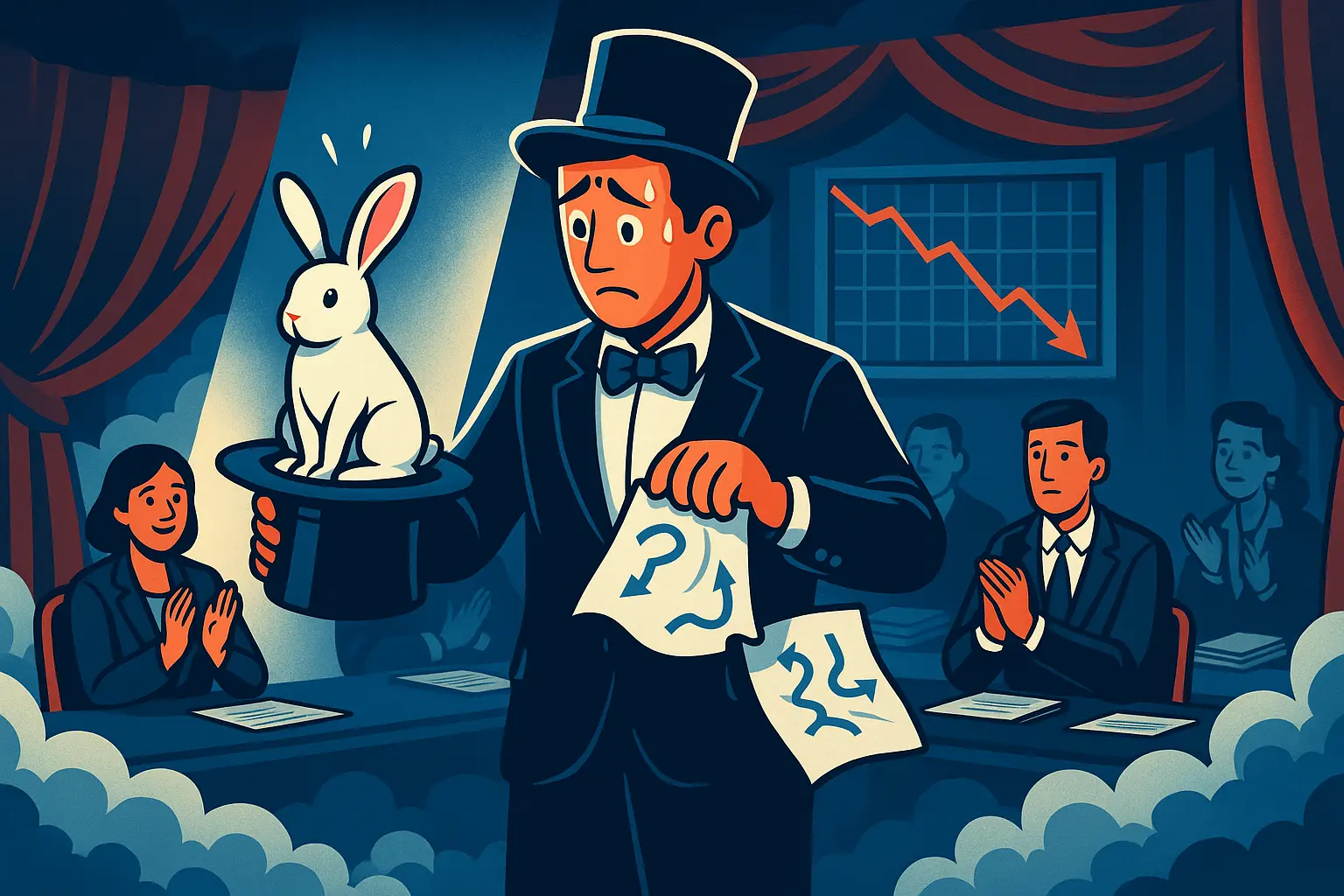
The Illusionist doesn’t argue. They nod. They smile. They ask questions that sound collaborative. And later, you realize the decision was made before you walked into the room. The “collaboration” was theater.
It feels like inclusion because everyone gets to talk, but the outcome never changes. The Illusionist isn’t gathering input. They’re gathering cover. When the plan fails, they can say, “Well, everyone was part of the decision.”
The damage is corrosive. Experts stop investing. Teams disengage. Compliance slips. Risks multiply because decisions aren’t grounded in expertise, but in optics. I’ve seen whole quarters wasted on this kind of theater while real problems festered underneath.
How do you cut through? Ask the blunt question in the room: “Is this input driving the decision, or is the decision already made?” You don’t need to be combative, just clear. Transparency breaks the illusion or forces honesty about who’s actually in charge.
Collaboration isn’t about nodding along. It’s about letting expertise change the outcome. Anything less is theater. And theater doesn’t keep the lights on.
"The single biggest problem in communication is the illusion that it has taken place." - George Bernard Shaw
The Budget Oracle (Anchor)
The conversation gets technical. Trade-offs, dependencies, requirements. Then someone cuts in: “But how much will it cost?”
Suddenly, everything tilts toward dollars. Risk, value, and motivation get flattened into a single metric.
The Budget Oracle looks safe because numbers feel objective.
But what’s really happening is someone reaching for money as a shield when they’re out of their depth. Instead of clarifying needs, they anchor on cost. And because nobody wants to appear careless with money, the room bends to that anchor.
The result isn’t discipline. It’s blindness. Teams bail on requirements before they’re fully defined. Vendors get forced into early cost gymnastics. Internally, the chance to clarify needs and align on value disappears.
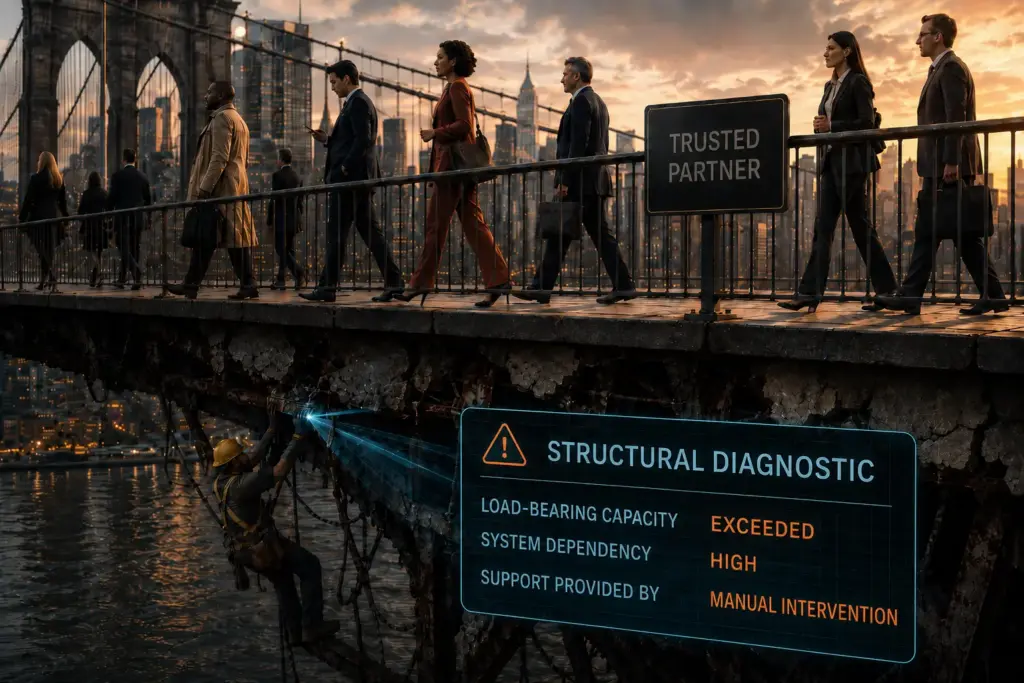
And the irony? It often costs more. Cheap options fail and get rebuilt. Compliance shortcuts “to save money” resurface as seven-figure audit findings. The problem wasn’t the budget. It was treating cost as the first filter instead of one of several.
How do you handle it? Don’t dismiss the budget. Reframe it: “Yes, cost matters. But cost only makes sense in the context of value: risk avoided, efficiency gained, compliance maintained.” Build requirements first. Then weigh them against the market. If the gap is real, name it. Sometimes the solution doesn’t exist yet, but you’ve still sharpened the need.
Budget isn’t a waste of time. But budget alone doesn’t steer the work. Needs come first. Value comes next. If the budget’s out of whack, at least you know what you’re saying no to.
"Price is what you pay. Value is what you get." - Warren Buffett
The Contrarian (Debater)
It starts the moment progress is within reach. The room is aligned, the path forward is clear, and then the Contrarian speaks up. Not to sharpen the plan, but to push back for the sake of pushing back. Every decision becomes a foil for their cleverness. What could have been consensus turns into a sparring match centered on them.
Contrarians thrive on opposition. To them, agreement feels like invisibility, and invisibility feels like irrelevance. So they manufacture friction to stay in the spotlight. It’s less about the issue at hand and more about proving wit.
The cost is subtle but corrosive. Momentum slows. The team starts preparing for arguments instead of solutions. Experts grow defensive, progress feels like walking uphill, and decisions bend toward the loudest objector rather than the clearest path.
How do you cut through? First, acknowledge their input without fueling the contest: “That’s one perspective. Let’s log it and move forward with the current plan.” Second, redirect the focus outward: “Instead of what we shouldn’t do, what do you recommend we do?” This shifts the Contrarian from clever critique to constructive contribution.
If you’re managing them, coach in private. Frame it not as silencing, but as channeling. Their energy has value when it’s anchored in outcomes, not opposition.
Because disagreement isn’t the problem. Progress dies when disagreement becomes the point.
“Some people find fault like there is a reward for it.” - Zig Ziglar
The Incidental Expert (Masker)
The Incidental Expert doesn’t storm the stage. They slip onto it. You’ll recognize them when you make a point, and a moment later, they restate it with new packaging as if it were their own. Or when they echo consensus with a twist that makes them sound like the authority.
This move feels harmless, even flattering at first. But over time, it siphons credit from true expertise and muddies accountability. When everyone nods at the Incidental Expert, the real contributors fade into the background. And when outcomes sour, nobody’s quite sure who owned the call.
Why does it happen? For some, it’s insecurity. They want the aura of expertise without the scars of trial and error. For others, it’s opportunism. A way to ride the momentum of others without taking the risk of being wrong. Either way, it creates noise instead of clarity.
The cost is trust. Experts hesitate to share openly if their input will just be repackaged. Teams spend more time clarifying “who said what” than driving the work forward. And leaders may misplace confidence in the wrong hands, leaving critical decisions built on borrowed authority.
The counter is clarity. Give credit in the moment: “That’s exactly what Priya pointed out earlier.” Keep ownership tied to the original voice.
If you’re managing them, don’t shame them. Coach them toward original contributions. Encourage them to lead with questions or build on others explicitly instead of echoing.
Because expertise isn’t about sounding like the smartest person in the room. It’s about adding something the room didn’t already have.
“An expert is one who knows more and more about less and less until he knows absolutely everything about nothing.” - Nicholas Murray Butler
Finale
At the heart of it, performative behavior is just fear wearing a mask. The urge to dominate, hijack, filter, or control comes from the same shaky belief: without performance, there’s nothing underneath. But that isn’t true. Real strength doesn’t need a spotlight. It shows up in outcomes, in trust that compounds, in systems that keep standing even when people stumble.
And people can change. We’ve all been there, under pressure, trying to prove ourselves, tempted to grab control when what we really needed was to listen. Professionalism doesn’t ask for perfection. It asks for awareness, for courage, for the willingness to risk being disliked if that’s what speaking truth to power requires.
That’s the shift. Let go of the performance, and you leave room for competence to show up. Trade performance for presence, and fear gives way to trust. That’s where progress actually lives: not in theater, but in the discipline of doing the work and letting the results speak.
As for me? I’ll take messy truth over polished theater any day. At least the truth gets the work done… 😉
#actualintelligence
"Courage is not the absence of fear, but the triumph over it." - Nelson Mandela