For about fifteen years I have worked alongside people whose professional habits came from somewhere other than the profession.
I joined a Security Operations Center staffed mostly with junior analysts. They were enthusiastic about security and almost entirely theoretical about it. Magic cards during shift. Technique picked up from YouTube. Pre-built tools pointed at a lab that could not fight back.
I kept my own background quiet. They were forming their view of the work, and I wanted to see what that view looked like without me leaning on it.
One conversation told me everything. I mentioned, in passing, that I do not spend time on cesspool sites like Reddit.
“Yeah, I can tell.”
Not a joke. A placement. Somewhere along the way, fluency in that culture had become the qualification, and not having it was the thing that showed.

“We are lonely but fearful of intimacy. Digital connections and the sociable robot may offer the illusion of companionship without the demands of friendship.” - Sherry Turkle.
The feed, running in the background
The habits were the ones those platforms reward. Fast judgment. Short attention. A reflexive sort into with us or not with us before anything had been read properly.
Ideas got voted on before they got understood. Suggestions from outside the group did not get argued with. They got ignored, which is cheaper and reads as strength. Disagreement happened sideways, in side channels, never in the room where it could be answered.
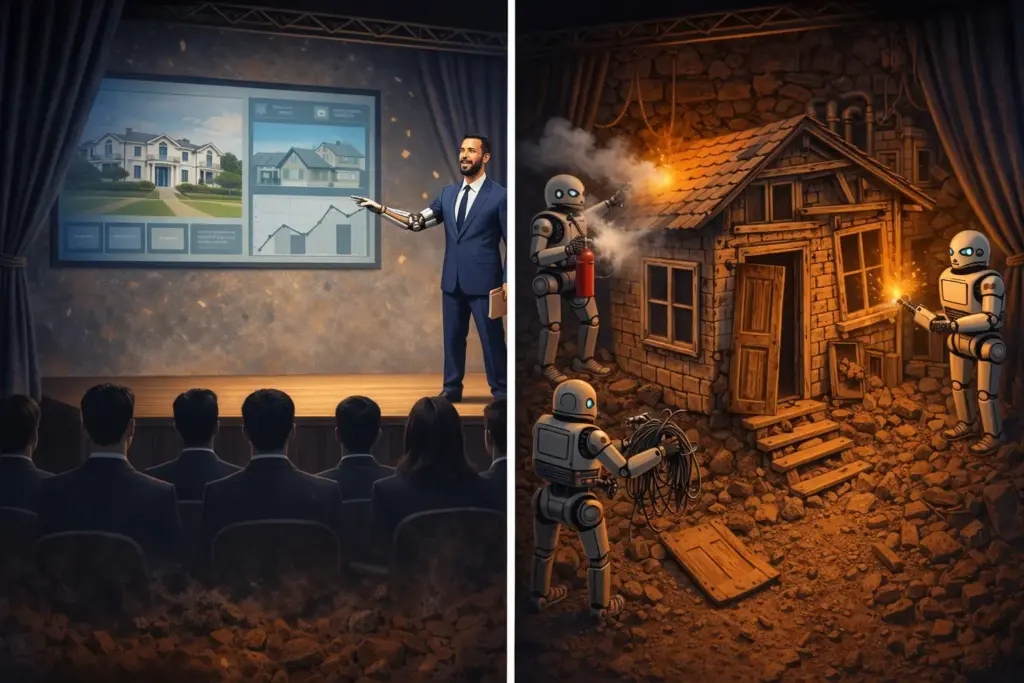
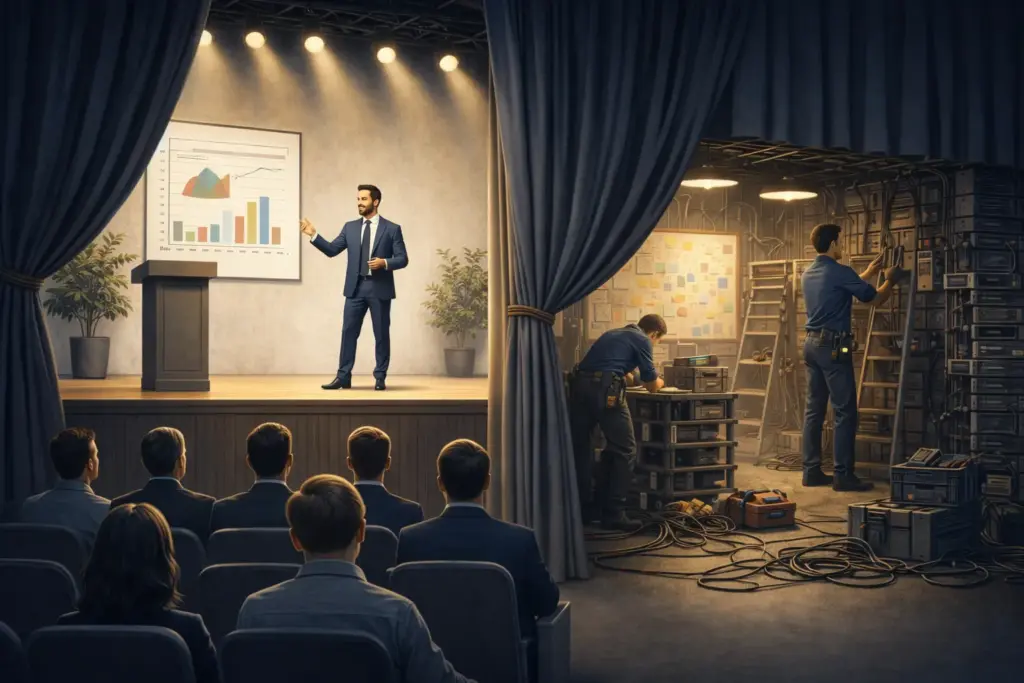
These were not stupid people. That is what made it worth writing about. The reflexes work extremely well in a public forum full of strangers who might be hostile, and badly in a room of eight people who have to ship something together. Nobody told them the rules had changed, and the ones who had noticed were not in the group that got listened to.
The man in the shadows
One colleague was the complete version of it.
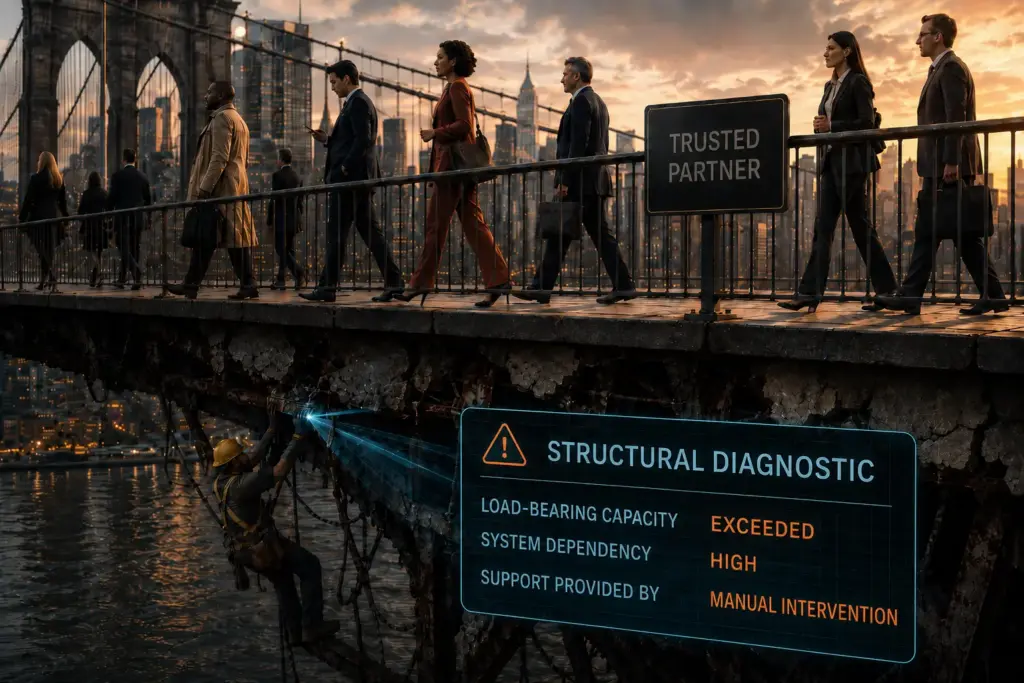
He operated at a careful distance from everyone. Complaints never arrived where they could be answered. They went behind people’s backs, to anyone who would take them, assembled over weeks into a case that had never once been tested against the person it was about. He ran on that. It was a sustaining supply, not an occasional outlet.
And he was miserable. Not dramatically. Just steadily, visibly, for years.
That is the part that did not fit the story he was telling himself. The anonymity was supposed to be protection. What it actually did was guarantee that nothing he was unhappy about ever got fixed, because he had made certain nobody could fix it. He kept the grievance and lost the resolution, then did it again the next month.
The silent treatment
Written as a sequence, it goes like this.
Someone feels passed over. They say nothing. They retreat into a private comment section and start building the case, refined over days, never checked against anyone who was there. Eventually it gets posted somewhere anonymous, with the inconvenient half left out.
By the time it surfaces, it is not a problem any more. It is a verdict.
The cost is not the complaint. It is that something fixable in a two-minute conversation has been compounding for a month, and the first anyone hears of it is when it goes off.
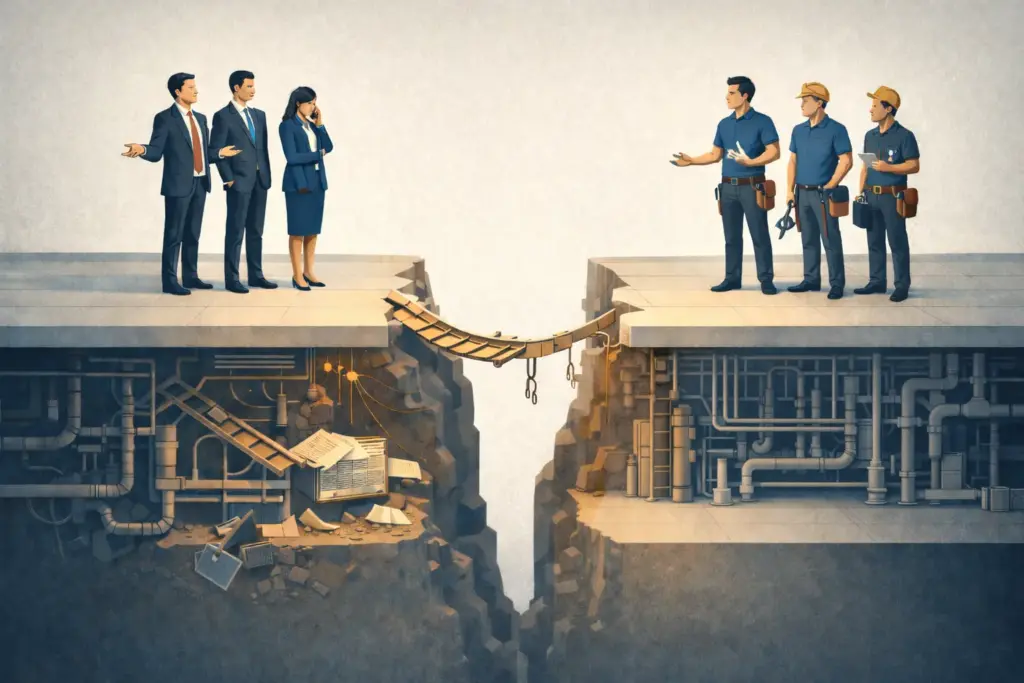
The reflex makes sense where it was learned. In a forum full of strangers, going quiet and venting elsewhere is self-protection. At work, where the other person is three metres away and would probably have said “oh, I didn’t realise, let’s sort it,” it is just damage with extra steps.
"The more social media we have, the more we think we're connecting, yet we are really disconnecting from each other." - JR.
Why the habit is sticky
It is worth being fair about the mechanism, because “they’re just like that” is not a diagnosis.
Every like, upvote and reply is a small, fast, reliable hit of validation. Real work offers nothing comparable. A hard problem gives you nothing for three days and then, maybe, a quiet result nobody notices. If your sense of being valued has been calibrated against a feed, three silent days feels like being ignored.
So you check out a little. You look for the quick win, the sharp comment, the thing that registers. Resilience erodes in the same motion. When approval arrives in a steady drip, criticism starts to feel like withdrawal rather than information.
That is a trained response, not a character flaw. Training can be undone. It just has to be worth undoing to the person doing it, and that is the part nobody can do for them.
"Our brains are being trained to crave the rapid feedback and validation that social media provides, which can lead to a decrease in our ability to handle real-world social interactions." - Dr. Larry Rosen
What actually moved the needle
Not team-building exercises. The things that worked were smaller and more boring.
Make the direct conversation cheaper than the private one. Most people are not choosing to be indirect. They are choosing the route with less risk. If raising something in the room reliably gets a calm hearing, including when it is about you, the private route stops being the safer bet.
Ask the question that cannot be upvoted. “What would you do instead?” ends a lot of reflexive objections, not because it is clever but because it asks for a position rather than a reaction.
Name the behaviour, never the person. “This got dismissed before anyone read it” is fixable. “You’re being a troll” is an identity, and identities get defended rather than changed.
Notice the slow work out loud. If the only thing that earns visible recognition is the dramatic save, you have built a feed, and people will perform for it.
And the honest part: it does not work on everyone. Some people are not disengaged, they are just somewhere they do not want to be, and the kind thing is to help them leave. My colleague in the shadows was never going to be reached by a better feedback culture. He had built something that worked for him, and the price was only ever paid by everyone around him.
The part that stayed with me
It was never that they were inexperienced. Everyone starts theoretical. I did.
It was watching capable people spend their energy on positioning instead of on the work, and leave a year later with the positioning intact and the skills roughly where they started. The armour was genuinely protecting them. It was just protecting them from the thing that would have made them good.
The platforms did not invent any of this. They made it fast, frictionless and rewarding, and then we hired a generation fluent in it and assumed the fluency would stop at the door.
It does not stop at the door. But it is a habit, not a personality, and habits answer to the environment you put them in.
#actualintelligence